
LAST UPDATED: Jan 31, 2025
Warts are small rough lumps on the skin caused by a viral infection known as the human papilloma virus. Most people develop one or more warts at some time in their lives, usually before the age of 20. Warts most commonly affect the hands and feet (verrucas), but can affect any part of the body. Sometimes only one or two warts develop. Sometimes several occur in the same area of skin. Warts are harmless; they usually disappear without treatment, although this can take a few months to several years.
Warts are caused by infection in the outer layer of the skin (epidermis) with a virus called the human papilloma virus (HPV). The virus tends to enter the skin through tiny breaks in the skin surface. A common example is verrucas, which can be caught from the floors of shower cubicles and the areas around swimming pools. HPV is not highly contagious (i.e. not easily passed from one person to another), it is not clear why some people develop warts while others do not. People with a weakened immune system (immunosuppressed) have a higher risk of developing larger numbers of warts, which can be very persistent and hard to treat.
Warts on the feet can be painful. The shape and size of warts vary and they are sometimes classed by how they look. This leaflet does NOT discuss anogenital warts, which affect the skin around the anus and/or genital skin.

Common warts on the feet (plantar warts / verrucas) and hands - these vary in size from just a few millimetres to more than one centimetre. They may have a rough surface that protrudes (is raised up) from the skin surface. Close inspection with a magnifying glass may reveal small black dots.

Mosaic warts - this is when several warts join together on the bottom of the feet.
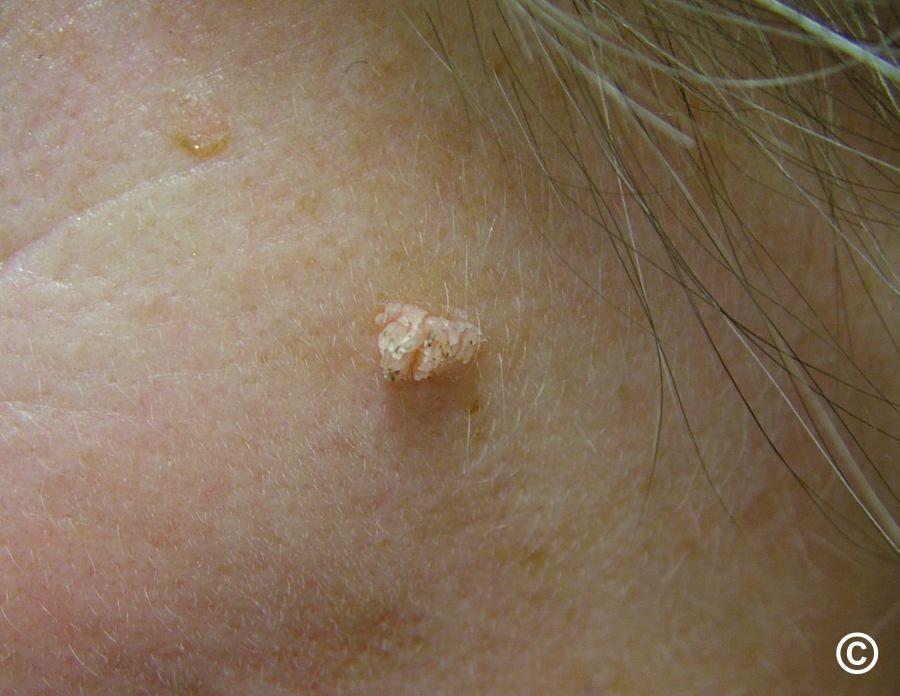
Filiform warts - these are often solitary (one lesion) and are most commonly found on the face and neck, but can occur on any part of the body. They are often skin-coloured with finger-like projections.

Plane warts - the face and backs of hands are the most common sites. Lesions are often numerous, appearing as small (less than 5 mm), round, and slightly elevated lesions with a smooth surface.
To reduce the chance of passing on warts to others:
To reduce the chance of warts spreading to other areas of your body:
There is no need to treat warts if they are not causing you any problems. Half the number of children with warts will find they have disappeared within a year without any treatment. Two-thirds will have gone within two years. Sometimes warts last longer, particularly in adults or if you have a weakened immune system (immunosuppressed), in which cases warts may persist for many years.
If warts on the hands and/or feet are painful; the pain can be relieved by paring the warts - the affected skin should be soaked in warm water and the thickened skin filed away with a pumice stone or emery board. Care should be taken not to scrape the surrounding normal skin, and not then use such items on healthy skin, so as to avoid spreading the virus.
If warts on the hands and feet continue to cause difficulties there are a number of treatments that can be tried. People more likely to improve with treatment are younger people with common warts. People less likely to respond to treatment are those with mosaic warts older people, and those with a weakened immune system (immunosuppressed). Common warts can be managed as follows:
Salicylic acid treatment can be purchased from a pharmacy and usually comes as a paint or a gel. Read the instructions in the packet on how to use it, or ask your pharmacist for advice. If you have diabetes or poor circulation, you should only use salicylic acid on the advice of a doctor. Treatment is usually as follows:
If warts have not improved with the treatments mentioned above and are causing significant problems, some GP surgeries may be able to offer treatment with a much colder freeze spray called liquid nitrogen (cryosurgery). Not all GP surgeries have access to this so before you make an appointment phone your GP surgery to see if this is available. Liquid nitrogen can be used on common warts and some filiform warts. It is NOT suitable for young children as it is painful, can cause a blister, and several treatments given every 1-3 weeks are usually needed. Even then there is no guarantee that the treatment will work. Cryosurgery can also leave a scar and/or area of discolouration, and damage the nail permanently if used on the skin surrounding a nail.
There are several other treatments that can be used by specialists. Treatment is not usually available on the NHS to treat warts unless there are complications or they are very severe. Treatment is available as a private (paid for) service from many podiatrists, and some dermatologists. There is no guarantee that other treatments will help, even with surgical treatment (where the wart is cut out or scraped out) there is a significant chance that the wart will regrow.
If you, a family member, or friend have an undiagnosed skin condition; or you want to learn more about how to treat skin conditions, please view our short video on how to get the best from this website.
Disclaimer - the author PCDS cannot accept responsibility for any misleading or incorrect statements, and the management of individual patients remains the direct responsibility of the individual doctor. We do however hope that visitors to this site can contact us regarding comments that are considered misleading or incorrect so that we can continue to improve the site.
Image Rights - The PCDS would like to thank Dermatoweb, DermQuest (Galderma), and others who have contributed images. All named individuals and organisations maintain copyright for the relevant images.
The following pharmaceutical companies have had no involvement in the content of this website or in our conference programmes