Lichen sclerosus - male

LAST UPDATED: Oct 25, 2024
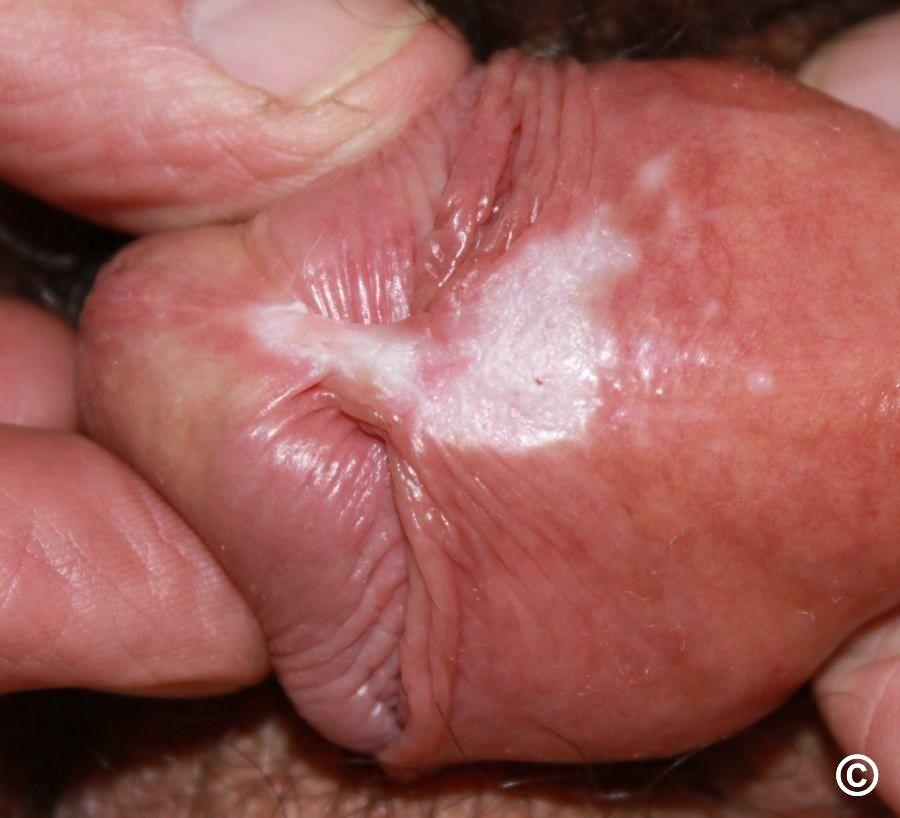
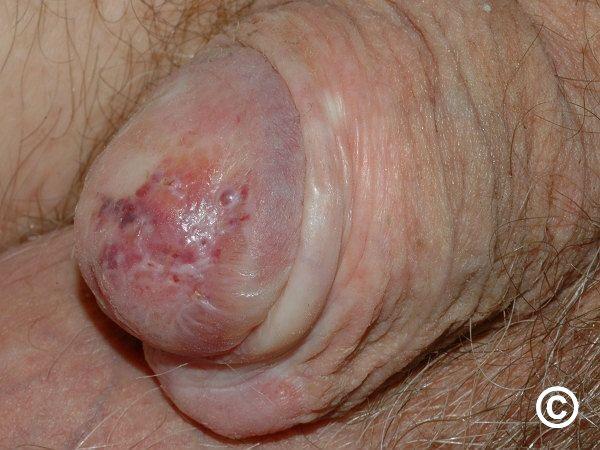
Introduction

Male genital lichen sclerosus (MGLSc) is an uncommon inflammatory dermatosis affecting uncircumcised genitalia, i.e. the glans (head of penis) and the prepuce (foreskin), which presents with a range of symptoms related to the inflammatory process, scarring, or urological issues. Perianal and extragenital lichen sclerosus are rare in men.  


Aetiology

In the absence of trauma, piercing, and gross anatomical abnormalities (eg frank hypospadias), MGLSc only affects uncircumcised men, and appears to be caused by the long-term occlusion of urine between the susceptible epithelium of the prepuce and glans.

In circumcised males, a tiny drop of urine appearing at the meatus postmicturation will have negligible contact with a keratinised glans before being absorbed by undergarments. In an uncircumcised male with similarly dysfunctional terminal urethral arrangements, the situation is very different. In these men, urine dribbling from the meatus after the prepuce has been replaced following voiding will spread widely between the tightly opposed mucosal surfaces of prepuce, glans, and distal shaft of the penis. Occlusion and the phenomenon of koebnerisation precipitate inflammation then scarring, with a subsequent increased risk of malignant change. 


History

Male genital lichen sclerosus can occur at any age; it is most common in childhood and in men in their 5th and 6th decade. In the early stages, lichen sclerosus can be asymptomatic. Symptoms may include:

  • Itch 
  • Active inflammation - pain, soreness, and dyspareunia
  • Scarring - splitting of the frenulum and foreskin, difficulty retracting the foreskin
  • A multitude of urinary symptoms including dribbling or spraying of urine, a less powerful stream, urinary frequency (including nocturia)
  • Difficulty with erections
  • Cosmetic disturbance 
  • Blistering - rare

Clinical findings

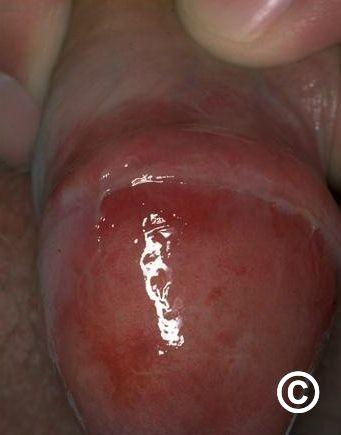
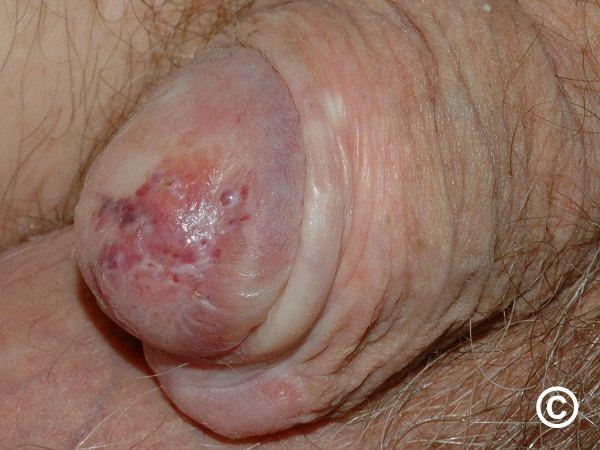
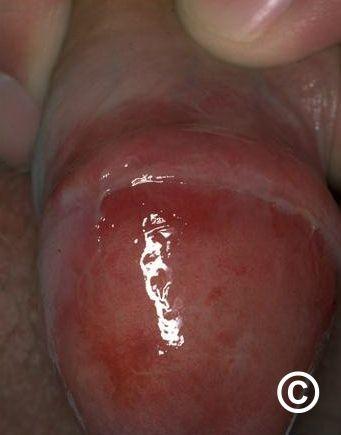
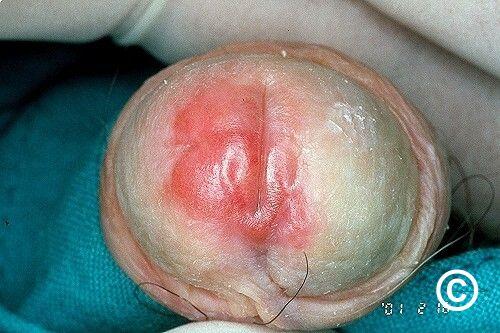
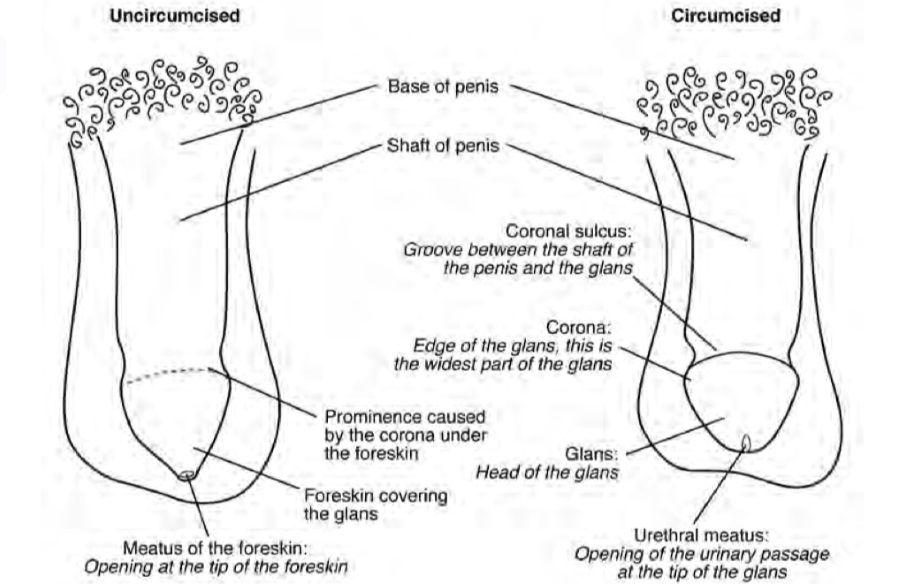
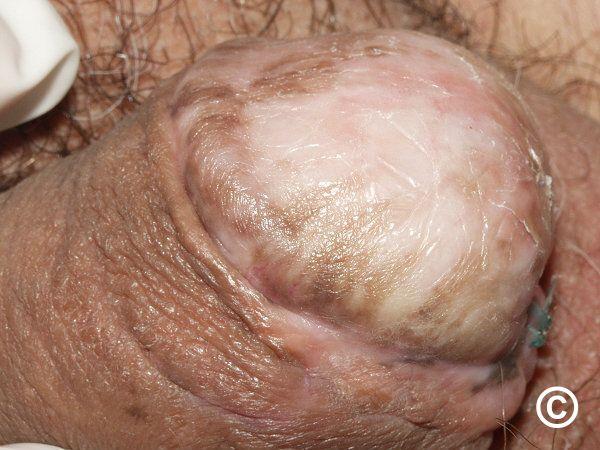
The normal anatomy in circumcised and uncircumcised men can be seen in figure 1. Findings in MGLSc are variable and can include:

Inflammation

  • Erythema, which can sometimes be moist and glistening (previously referred to as Zoon's balanitis)

Colour change

  • Hypopigmentation (diffuse or localised)
  • Melanosis (increased pigment)
  • Telangiectasia and/or ecchymosis (bruising)

Structural change

  • Meticulous physical examination often reveals an abnormal meatus or navicular fossa (the dilated terminal portion of the urethra in the glans penis)
  • Thinning/dulling of the coronal sulcus
  • A thickening of the frenulum 
  • Scarring and adhesions, leading to phimosis (inability to retract the foreskin) and occasionally paraphimposis (a urological emergency when the foreskin becomes trapped behind the corona of the glans penis) 
  • Hypospadias (the meatus isn't at the tip of the penis) 
  • Penile lymphoedema and cellulitis

Malignant risk

  • MGLSc is a risk factor for premalignant disease (penile intraepithelial neoplasia)
  • SCC - is more likely if MGLSc is not diagnosed in a timely fashion / managed effectively, resulting in prolonged inflammation. Up to 50% of all penile cancer is associated with lichen sclerosus, the risk has been estimated at between 2% and 12.5%.
  • Although penile melanoma is rare, the risk is increased in lichen sclerosus 

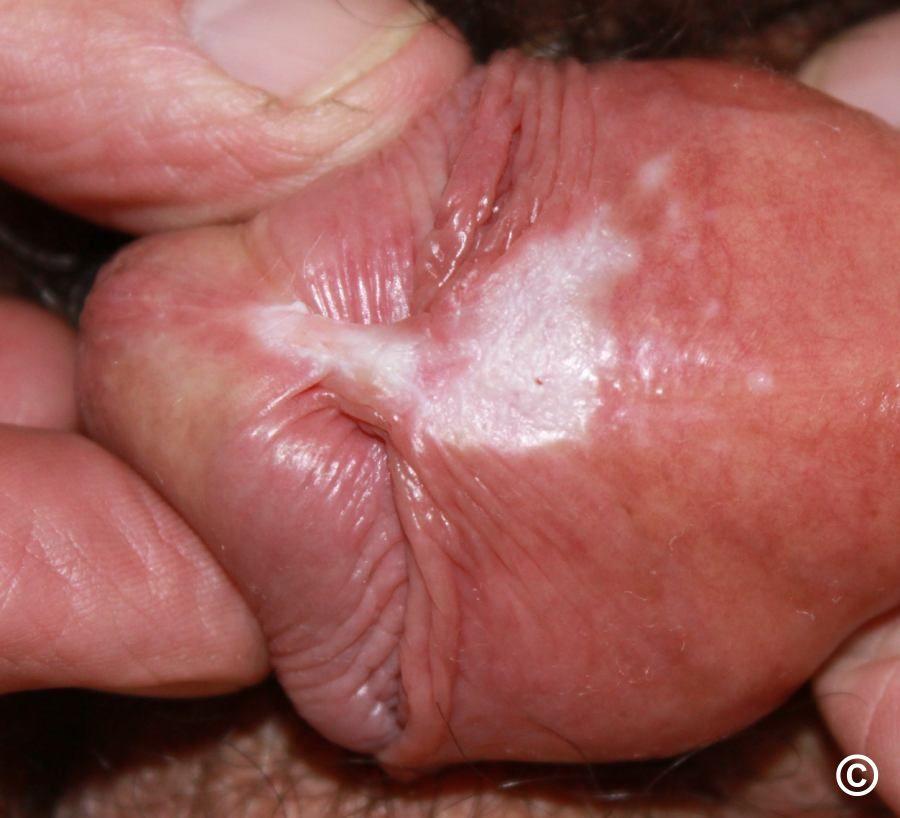
Clinical Images

Please refer to notes on image rights at bottom of the page with regards to individual image ownership.
Management

General measures

  • Provide a patient information leaflet 
  • Avoidance of irritants - when bathing/showering a soap substitute should be used for washing
  • The urethra should be completely emptied after voiding, the skin can be washed with plain water and patted dry 
  • An emollient ointment should be applied, ideally four times a day (eg in the morning, after washing, and overnight) 
  • If obesity is an issue, weight loss is important 
  • Pubic hair should be trimmed to reduce micro-erosions 

Topical therapies 

  • A super-potent topical steroid cream (eg Dermovate ®) should be used twice a day for 4 weeks at which time the patient should be reviewed
  • If there is a history of genital herpes simplex, the patient should be on prophylactic anti-viral therapy while using topical steroids at this site
  • If the patient chooses not to have circumcision then potent/super-potent topical steroids must be avoided long-term so as to avoid atrophy, instead use a moderately potent topical steroid cream such as Eumovate® or Trimovate® once a day PRN. Failure to respond to one or two courses of super-potent topical steroids, or early and florid relapses, are indications for circumcision

Biopsy  

  • Any persisting area of erythema (often moist/glistening), erosions, or a thickening/lump, require histology for diagnostic purposes - this should be done in Secondary Care
  • If the erythema is non-palpable and the patient has agreed to have circumcision then the sample requiring histology could be sent at the same time. One of the main differentials is erythroplasia of Queyrat, which is precancerous
  • In general, the following require urgent referral/biopsy:
    • Persistent erosions / palpable areas - to look for penile intraepithelial neoplasia (PeIN) or SCC. Refer to the related chapter for more information 
    • Have a low threshold for referring penile melanosis - although this is very common in lichen sclerosus, and largely stable over time, there is an increased risk of melanoma in such cases

Surgical treatment

  • Circumcision 
    • Can be used as above as part of a histological diagnosis
    • Is curative for the vast majority of cases of MGLSc
    • Is required for most cases of phimosis and paraphimosis
  • Urethroplasty or meatoplasty may also be necessary in the event of meatal stenosis

Prognosis

  • About two-thirds of men with MGLSc can be successfully treated by using topical therapies and following the general measures described above
  • In the remainder, circumcision is nearly always required
  • Following circumcision, the risks of urethral disease and penile cancer falls dramatically but are never zero. Self-examination should continue post-therapeutically, whether medical or surgical, and patients must report relevant changes without delay

Disclaimer - the author PCDS cannot accept responsibility for any misleading or incorrect statements, and the management of individual patients remains the direct responsibility of the individual doctor. We do however hope that visitors to this site can contact us regarding comments that are considered misleading or incorrect so that we can continue to improve the site.

Image Rights - The PCDS would like to thank Dermatoweb, DermQuest (Galderma), and others who have contributed images. All named individuals and organisations maintain copyright for the relevant images.

Quick Links

The following pharmaceutical companies have had no involvement in the content of this website or in our conference programmes


Almirall
Galderma
Glenmark
Johnson & Johnson
La Roche-Posay
LEO Pharma
Pierre Fabre
Schuco