Linear IgA disease (syn. chronic bullous disease of childhood; linear IgA bullous dermatosis)

LAST UPDATED: Jul 14, 2021
Introduction

Linear IgA disease is a chronic, acquired, immunobullous condition of children and adults, with cutaneous and mucosal involvement, characterised by IgA basement-membrane antibodies. It is rare with an incidence in Western Europe of 0.5 per million.

Two main clinical syndromes are distinguished, chronic bullous disease of childhood, beginning in childhood, and adult linear IgA disease, beginning in adult life. They differ in their age of presentation and to some extent their clinical signs, although there is much overlap.

This chapter is set out as follows:


Aetiology

  • Linear IgA disease is an immunobullous condition
  • The immunobullous conditions are characterised by pathogenic autoantibodies directed at target antigens whose function is either cell-to-cell adhesion within the epidermis or adhesion of stratified squamous epithelium to the dermis or mesencyme. The target antigens involved are components of desmosomes or the functional unit of the basement membrane zone known as the adhesion complex
  • In linear IgA disease, IgA autoantibodies are directed against various basement membrane zone antigens including bullous pemphigoid antigens BP180 and BP230, LAD 285 and collagen V11 
  • Occasionally linear IgA disease can be secondary to infection, antibiotics (penicillins), vancomycin, diclofenac and less commonly other NSAID. Many other drugs have been implicated in case reports including captopril, co-trimoxazole, amiodarone, ciclosporin, glibencamide, lithium, penicillin, cefamandole, and phenytoin. Drug-induced disease resolves with withdrawal of the offending agent
  • Linear IgA disease has also been rarely associated with lymphoproliferative disorders, ulcerative colitis and other inflammatory bowel disorders 

History

  • Linear IgA disease affects all ages from infancy to the elderly:
    • Presentation in children commences at ages ranging from 6 months to 10 years, with a mean of 3.3-4.5 years based on two case series
    • Presentation in adults ranges from 14-83 years, being more common in the non-reproductive years with a mean age of 52 
  • Drug-induced cases are more likely to occur in the older population because this group is often being treated for multiple medical conditions

Clinical findings

Chronic bullous disease of childhood
  • The initial presentation is abrupt and more severe than subsequent attacks
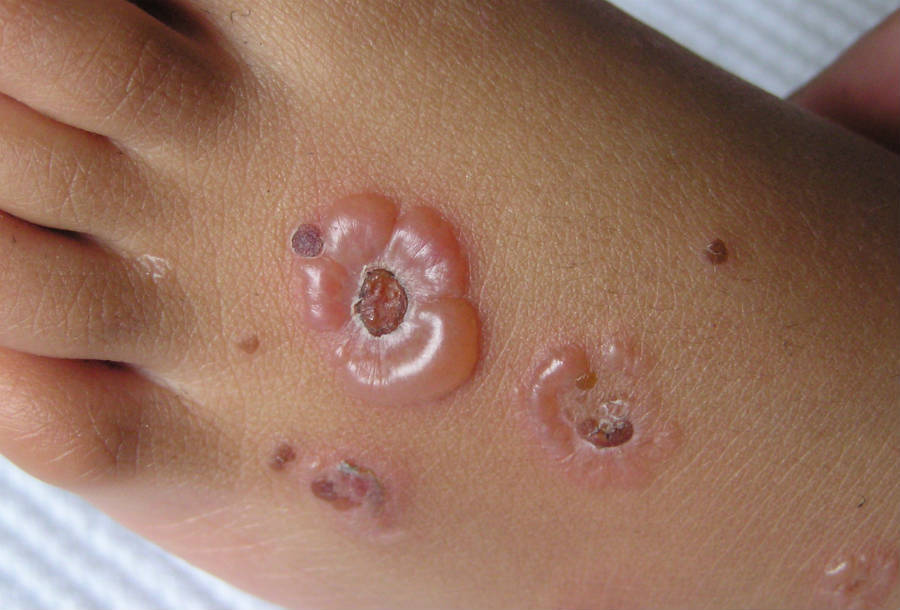
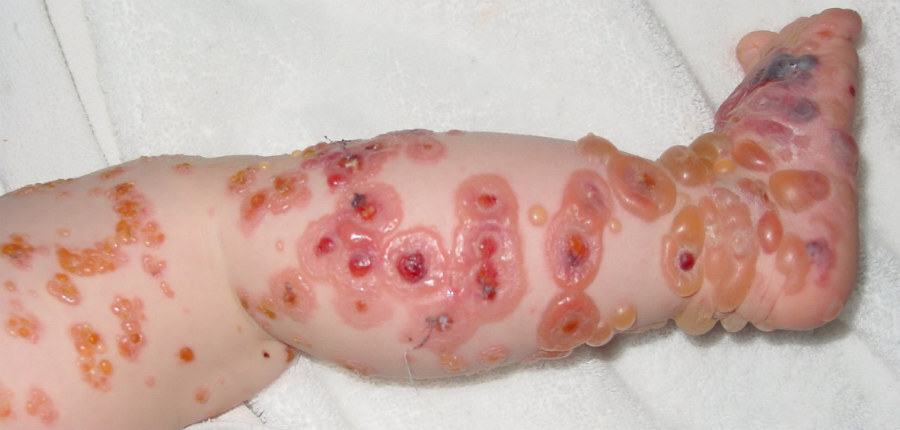
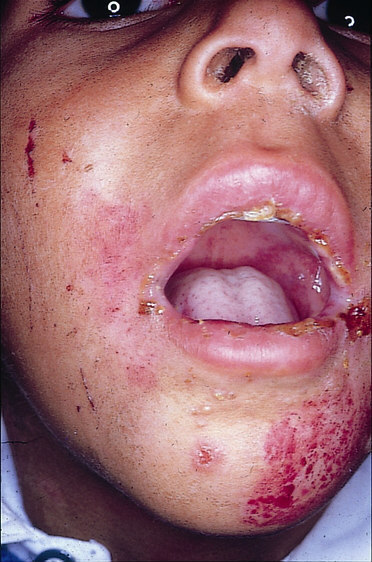
  • Lesions are typically localised to the lower abdomen and anogenital areas, with frequent involvement of the perineum. Other sites of involvement include the feet, hands, and face, particularly the perioral area. The eruption can become more widespread
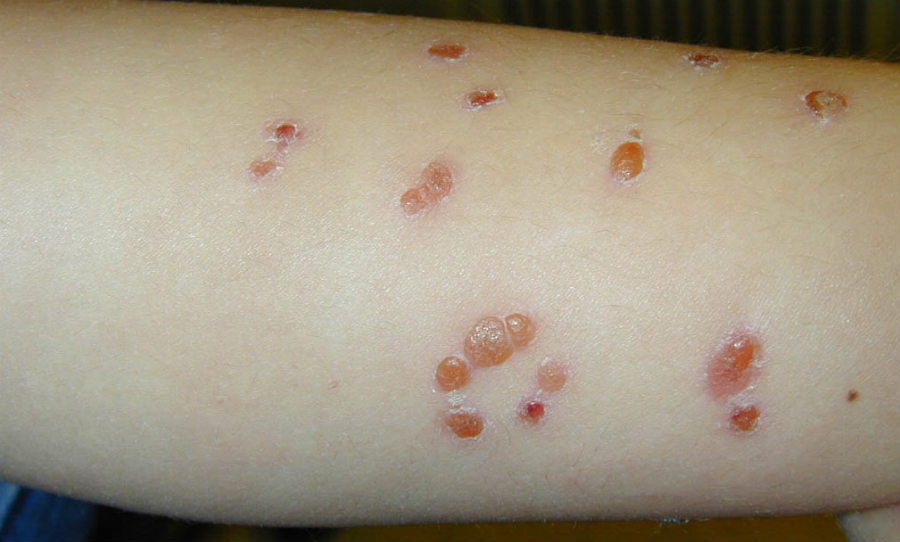
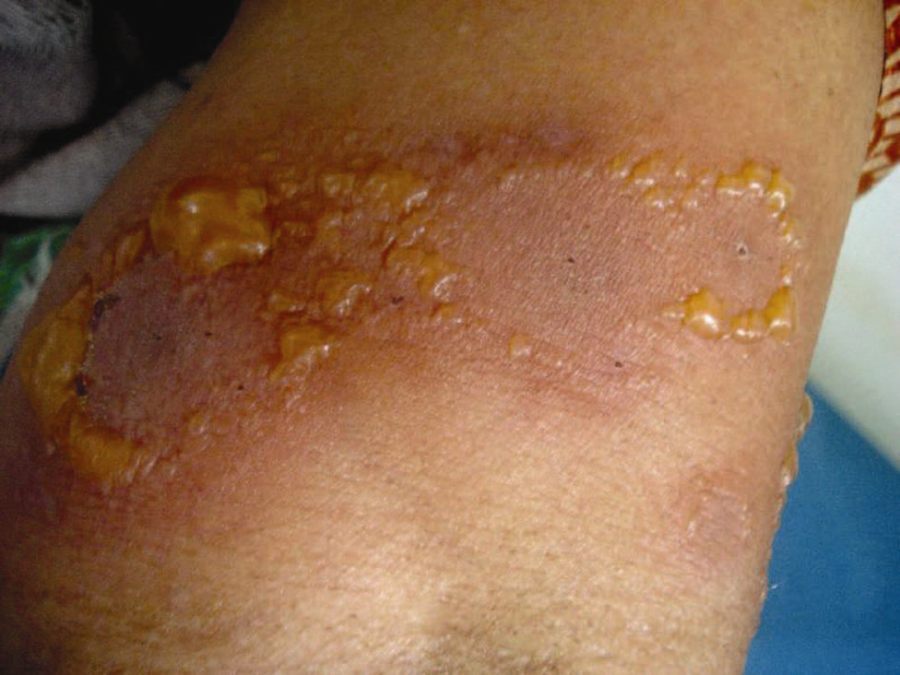
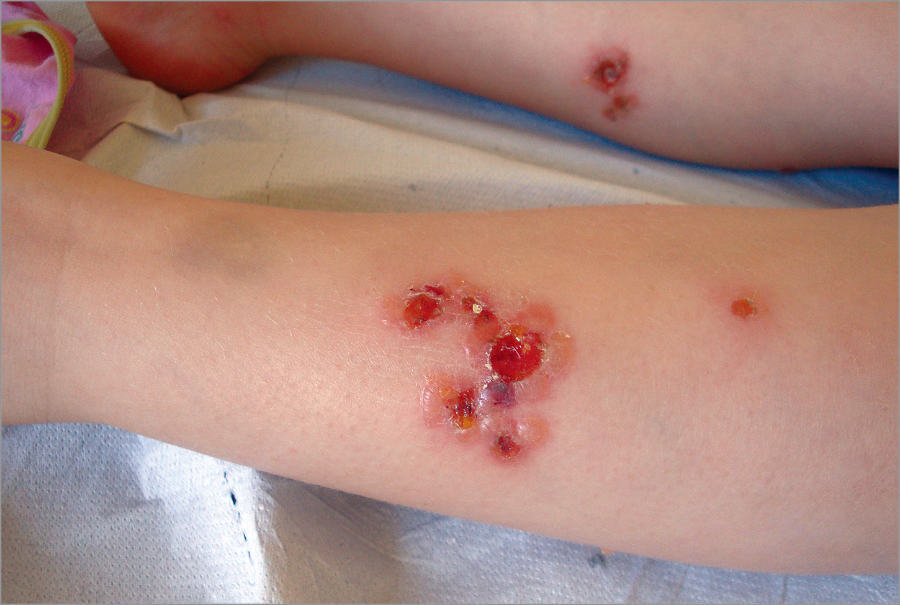
  • The lesions, which may itch or burn, comprise urticated plaques and papules, and annular, polycyclic lesions often with blistering around the edge known as the 'string of pearls' sign
  • Mucosal involvement, which can precede cutaneous signs, is common with blisters and ulceration on the lips and inside the mouth in approximately 50% of cases. Lesions may spread to the pharynx. Conjunctivitis is also relatively common
Linear IgA disease of adults
  • The onset may be insidious or more abrupt
  • The trunk and limbs are the most commonly affected sites. Involvement of the perineum and the perioral area is less common than in children
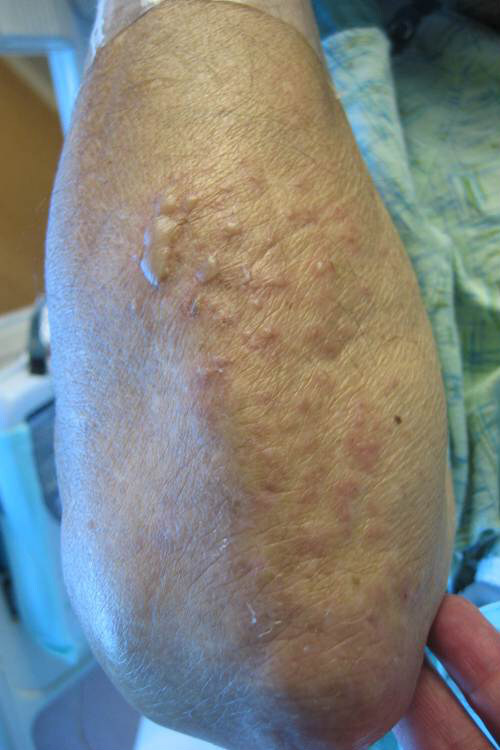
  • The lesions, which may itch or burn, comprise urticated plaques, papules, vesicles and blisters. The blisters may arise from normal skin or urticated plaques, and can be haemorrhagic. The characteristic 'string of pearls' lesions are less common than in children
  • Mucosal involvement is similar to that seen in chronic bullous disease of childhood 
Linear IgA mucous membrane pemphigoid 
  • Patients with typical signs of mucous membrane pemphigoid, who have linear IgA on direct immunofluorescence, are best regarded as having mucous membrane pemphigoid

Clinical Images

Please refer to notes on image rights at bottom of the page with regards to individual image ownership.
Investigations

Blood tests - indirect immunofluorescence 
  • A request for skin antibodies covers both pemphigoid and pemphigus antibodies - approximately 50% of patients have detectable IgA basement membrane zone (pemphigoid) antibodies. These findings are more common in children than adults 
Skin biopsies (reference: Rook's Textbook of Dermatology)
  • Two skin biopsies are required 
    • An intact blister should be excised and sent for histology
    • A second biopsy, of peri-lesional skin (within 2 cm of the blister), is also required for direct immunofluorescence (DIF). The sample must be put on top of a piece of plain gauze, which has been soaked in a small amount of normal saline, and placed into a dry pot, the specimen must be examined the same day. If the sample cannot be examined the same day it must be placed in a suitable transport media eg Michel's solution, in order to preserve the sample. The result of DIF can sometimes be false negative, and if needed a further biopsy sample can be taken from unaffected skin of the thighs or buttocks
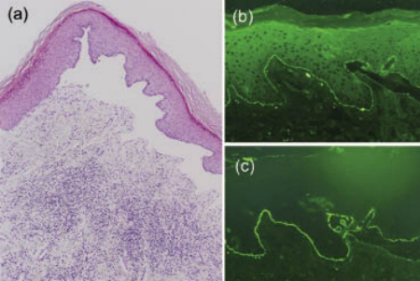
  • Histology of early urticarial papules or plaques reveals neutrophils aligned along the basement membrane zone (BMZ) accompanied by vacuolar change. Neutrophilic microabscesses may be seen in dermal papillae. Fully developed lesions reveal subepidermal blistering with a predominantly polymorphonuclear infiltrate, although mononuclear cells and eosinophils may be present
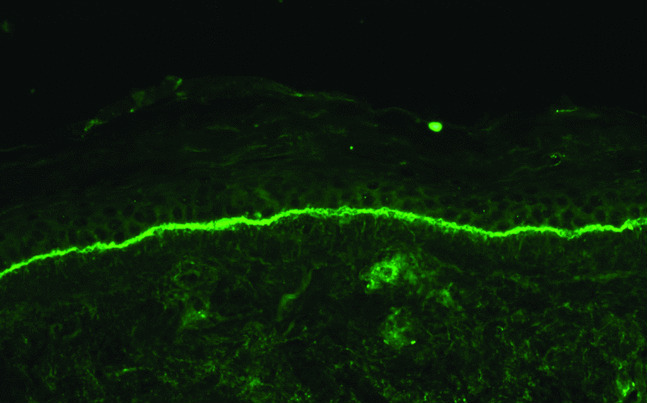
  • DIF of both peri-lesional skin and healthy skin typically shows linear deposition of IgA at the BMZ. Linear deposition of C3 may also be seen, and some patients demonstrate both linear IgA deposition and IgG deposition at the BMZ. IgM deposition has rarely been reported

Management

Step 1: general measures

  • This is a very uncommon condition - nearly all patients will be referred to Secondary Care for diagnosis and management 
  • Supportive measures include wound care and reducing the risk of secondary infection by using antiseptic regimes, eg Dermol 500 lotion ® as a wash and / or topical emollient
  • Provide a patient information leaflet  

Step 2: mild disease  

  • A few patients have mild disease and can be managed with potent or super-potent topical steroids  

Step 3: moderate-severe disease (the majority)

  • Erythromycin should be tried first-line in children
  • Dapsone
    • Is first line in adults, and second line in children
    • Start at doses less than 0.5 mg / kg and gradually increase up to 1 mg / kg or a little more 
    • Dapsone can occasionally cause a widespread rash, haemolytic anaemia and, rarely agranulocytosis. Such complications normally occur early. Patients need regular monitoring tests, including an FBC, U&E, LFT and reticulocyte count. Patients must stop treatment and report immediately if they develop a skin rash, a high temperature, a sore throat or mouth ulcers, and any unexplained bruising or bleeding. Occasionally a distal motor neuropathy occurs, this is more commonly seen in patients on higher doses of long-term dapsone. Before commencing treatment patients require a blood test for glucose-6-phosphate deficiency (G6PD), a deficiency increases the risk of dapsone-induced haemolytic anaemia two-fold - people of Mediterranean, African and Asian ancestry are especially at risk 
  • Other treatments include tetracycline antibiotics, colchicine, sulfamethoxypyridazine, prednisolone, azathioprine, mycophenolate mofetil
  • ​Mucosal lesions - respond less well to treatment than cutaneous lesions 

Prognosis

  • Although the condition usually resolves spontaneously, many patients require treatment for long periods as a reduction in dose of medication often results in further blistering

Disclaimer - the author PCDS cannot accept responsibility for any misleading or incorrect statements, and the management of individual patients remains the direct responsibility of the individual doctor. We do however hope that visitors to this site can contact us regarding comments that are considered misleading or incorrect so that we can continue to improve the site.

Image Rights - The PCDS would like to thank Dermatoweb, DermQuest (Galderma), and others who have contributed images. All named individuals and organisations maintain copyright for the relevant images.

Quick Links

The following pharmaceutical companies have had no involvement in the content of this website or in our conference programmes


Almirall
Galderma
Glenmark
Johnson & Johnson
La Roche-Posay
LEO Pharma
Pierre Fabre
Schuco